
Life in Australia ·
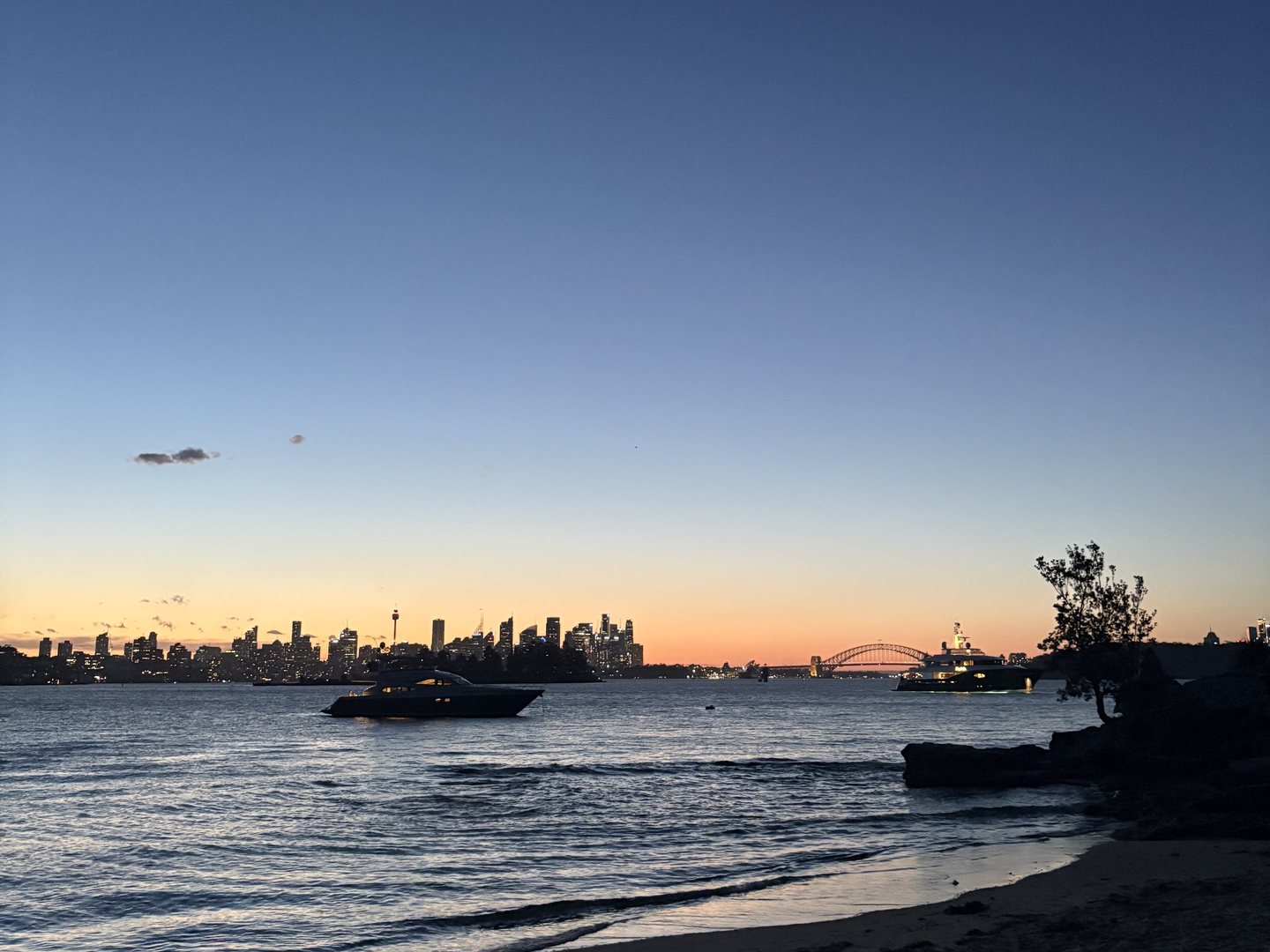
Sharing a home in Sydney in 2027 might cost roughly A$2,000–3,500 a month, depending on room type, transport and lifestyle. A very tight budget may be lower; an expensive area and frequent outings can cost more.
Rent usually makes the biggest difference. CAF Connect's practical reference is around A$270–350 a week for a bed in a shared room, or A$350–500 for a private room in a shared home.
These are indicative references, not official average prices or guarantees of availability.
This guide offers realistic planning budgets for someone arriving on a Working Holiday, commonly overlooked costs and tips for choosing accommodation without using all your savings.
Summary: monthly living costs in Sydney
Here are three monthly budget examples for one person without a car, sharing a home and paying day-to-day expenses.
| Monthly expense | Tight | Balanced | More comfortable |
|---|---|---|---|
| Rent | A$1,170 | A$1,400 | A$1,950 |
| Groceries | A$350 | A$450 | A$550 |
| Public transport | A$100 | A$160 | A$200 |
| Phone | A$25 | A$35 | A$45 |
| Utilities not included | A$0 | A$60 | A$100 |
| Eating out, leisure and coffee | A$180 | A$300 | A$450 |
| Toiletries and other expenses | A$75 | A$100 | A$150 |
| Monthly total | A$1,900 | A$2,505 | A$3,445 |
CAF Connect created these scenarios to help you plan; they are not statistical averages. The tight scenario assumes utilities are included in rent.
They exclude insurance, flights, bonds, courses, travel, medical expenses and exceptional purchases.
If arriving in Sydney without guaranteed work, use a conservative monthly budget and keep extra funds for unexpected costs.
1. What does renting a room in Sydney cost?
Australian rents are commonly advertised weekly rather than monthly.
To convert weekly rent correctly into a monthly amount, multiply by 52 and divide by 12.
Bed in a shared room: A$270–350 per week
Sharing a room means sleeping in the same bedroom as one or more other people.
It may suit a tight budget, but consider privacy, household dynamics and occupancy.
| Weekly rent | Monthly equivalent |
|---|---|
| A$270 | A$1,170 |
| A$300 | A$1,300 |
| A$350 | A$1,517 |
These are CAF Connect's indicative references. You may find higher or lower prices.
Private room in a shared home: A$350–500 per week
A private room gives you your own bedroom, usually with a shared kitchen, bathroom or communal spaces.
| Weekly rent | Monthly equivalent |
|---|---|
| A$350 | A$1,517 |
| A$400 | A$1,733 |
| A$450 | A$1,950 |
| A$500 | A$2,167 |
A private room is not an entire apartment. Living alone in a separate property can cost considerably more.
Are bills included?
Before accepting a room, ask whether the price includes:
- Electricity and gas.
- Water.
- Internet.
- Furniture.
- Cleaning or shared services.
Do not compare rooms solely on advertised rent.
A room at A$380 including bills may be better value than one at A$360 with additional bills.
2. How much do you need to move into a room?
This cost is often forgotten when budgeting.
When securing accommodation, you may need to pay a bond and rent in advance.
For a room costing A$350 a week, a hypothetical four-week bond and two weeks' rent in advance would mean:
| Item | Amount |
|---|---|
| Four weeks' bond | A$1,400 |
| Two weeks' rent in advance | A$700 |
| Initial funds needed | A$2,100 |
That does not mean every rental requires those amounts. Legal limits and obligations depend on the tenancy type and jurisdiction.
The bond may be refundable at the end, but you need the money upfront.
Check the applicable rules with NSW Government — Renting.
CAF Connect tip: do not transfer money without verifying the accommodation, the responsible person's identity and the agreement's terms.
3. Sydney neighbourhoods to consider for your budget
No neighbourhood is perfect for everyone.
Consider where you will work, what you can afford and the lifestyle you want.
Bondi, Coogee and the Eastern Suburbs
These areas appeal if you want beach access, sports and other travellers.
The location may make accommodation more expensive, and some journeys may depend on buses.
Surry Hills, Redfern and the CBD surrounds
They may suit you if you want an urban setting, cafes, restaurants and connections across the city.
Compare specific rooms because prices vary substantially.
Newtown, Marrickville and the Inner West
Research these areas if you value culture, local businesses and transport links.
Do not assume the entire Inner West is cheap: prices depend on the street, property and transport access.
Parramatta and Western Sydney
They may offer alternatives to the city centre and eastern beaches.
Before choosing, check the journey time to potential workplaces.
Where can I look for accommodation?
Start with Flatmates, Domain and realestate.com.au.
Also check rental conditions and possible scam warning signs.
The best room is not always the cheapest: it is one you can afford that lets you live and travel reasonably well.
4. What does food in Sydney cost?
Food spending depends heavily on your habits.
Cooking at home, planning groceries and taking packed meals can make spending easier to control.
Eating out almost daily can quickly increase your budget.
Grocery budget
For planning, we suggest these scenarios:
| Shopping style | Weekly budget | Approximate monthly amount |
|---|---|---|
| Tight | A$80 | A$347 |
| Balanced | A$105 | A$455 |
| More flexible | A$130 | A$563 |
These are not official grocery-basket prices. They are hypothetical budgets to adapt to your diet and needs.
Compare ALDI, Coles, Woolworths and local shops.
Example allocation of A$105 a week
| Category | Budget |
|---|---|
| Protein and alternatives | A$35 |
| Fruit and vegetables | A$25 |
| Rice, pasta, bread and cereals | A$15 |
| Dairy and other staples | A$20 |
| Extras | A$10 |
| Total | A$105 |
This table illustrates allocating money, not a shopping basket checked against supermarket prices.
Eating out, takeaway and coffee
This is where two people paying the same rent can end up with very different spending.
Daily coffees, takeaway deliveries and restaurants can add several hundred dollars to monthly spending.
Our advice is not to miss out on Sydney, but to separate grocery money from dining-out and leisure spending.
5. What does Sydney public transport cost?
Sydney's public transport includes trains, metro, buses, ferries and light rail.
Each fare depends on the mode, distance, time and applicable rules.
Use an Opal card or an accepted contactless payment method.
According to official fares checked in November 2026, the adult Opal weekly spending cap is A$50, with applicable daily caps and discounts. Not everyone spends A$50 a week; your trips may cost less.
The airport station access fee has specific conditions and is not included in the usual caps.
Check current fares with Transport for NSW.
Is living further away worth it for cheaper rent?
Imagine two rooms:
- Room A: A$350 a week, close to work.
- Room B: A$300 a week, further away.
The second saves A$50 a week before other costs, approximately A$217 a month.
Now calculate your transport costs and the time spent commuting.
With multiple daily journeys or night shifts, the cheapest-looking option may become less attractive.
Uber or DiDi
For occasional trips, compare both apps where available.
DiDi may be cheaper in some circumstances, but not always. Check the final fare before booking.
6. What do phone and internet services cost?
An Australian phone number may help employers contact you on a Working Holiday.
An indicative phone budget is A$25–45 a month, although plans and promotions differ.
Check that your plan includes calls and SMS if needed. Some travel eSIMs provide data only.
In Offers for your arrival in Australia you can explore SIM and eSIM options and available discounts.
7. Budgeting for leisure, the gym and socialising
Sydney has both free and paid activities.
Enjoy beaches, parks and coastal walks without spending much.
You will also find restaurants, concerts, excursions, gyms and events.
To control spending, distinguish free activities, routine social expenses and special experiences.
Meeting people without overspending
You can join:
- Running groups.
- Football or padel games.
- Language exchanges.
- Hostel activities.
- Community events.
- Free or low-cost outings.
In CAF Connect — Community you can explore our community and opportunities to connect with others.
8. Costs often left out of a budget
A rent-and-food budget does not explain every cost of Sydney life.
Also consider:
Insurance: check your Australia policy's terms and cover, especially for work or sports.
Courses and certificates: RSA or a White Card may be required for certain roles.
Laundry and toiletries: accommodation does not always include these.
Work clothing and equipment: some roles need particular footwear or clothing.
Health and emergencies: unplanned expenses may arise.
Travel: trips to other cities or regions need a separate budget.
Gym and subscriptions: include them as recurring expenses if you use them.
In Resources and courses to start working you can find useful courses and resources. To compare policies, visit CAF Connect — Insurance.
9. How much do you need to earn to live in Sydney?
To meet expenses, focus on take-home income rather than only the advertised gross wage.
These are the monthly amounts for our three scenarios:
| Budget | Monthly take-home income needed | Equivalent weekly take-home income |
|---|---|---|
| Tight | A$1,900 | A$438 |
| Balanced | A$2,505 | A$578 |
| More comfortable | A$3,445 | A$795 |
Weekly figures are rounded. They do not include additional savings.
To save A$500 a month, add that amount to your take-home income target.
For example, under the balanced budget:
A$2,505 expenses + A$500 savings = A$3,005 monthly take-home income.
We cannot convert that figure into working hours without your pay rate, tax, employment type and conditions.
Check pay rates for your industry with Fair Work Ombudsman.
If still job hunting, read our guide to how to find work in Australia.
10. What does living in Sydney without work cost?
This is especially important for Working Holiday arrivals.
Imagine a monthly budget of A$2,505 without any income yet.
| Time without income | Estimated expenses |
|---|---|
| 2 weeks | A$1,156 |
| 4 weeks | A$2,312 |
| 8 weeks | A$4,625 |
These are mathematical equivalents of a constant monthly budget. They exclude set-up costs, bonds and other unexpected expenses.
We therefore recommend a sufficient financial buffer, rather than planning on finding work immediately.
To calculate funds needed before departure, see our guide to how much money you need to go to Australia in 2027.
11. How to save while living in Sydney
Prioritise suitable accommodation
Sharing a home may reduce costs, but check the conditions and safety.
Cook and plan your shopping
Meal planning can reduce impulse purchases and frequent takeaway orders.
Compare phone plans
Check the price after introductory offers end.
Use public transport
Check fares and plan your journeys.
Make use of free activities
You do not need to spend money every weekend to enjoy the city.
Keep a weekly budget
Since many rents are paid weekly, tracking expenses on that basis can help you organise your budget.
Do not sign a rental you can afford only if you find work immediately
Without income yet, calculate how long savings can cover your accommodation.
12. Is living in Sydney worthwhile on a Working Holiday?
Sydney combines beaches, city life, outdoor activities and employment opportunities across several industries.
Costs can also be high, especially accommodation.
There is no universal answer.
If you value coastal life, sport and an international atmosphere, it may suit you.
If minimising costs is your absolute priority, compare other Australian cities and regions.
Choose Sydney because it suits your goals, not simply because you have heard people earn a lot there.
Frequently asked questions about Sydney living costs
How much does living in Sydney cost per month in 2027?
Our indicative scenarios range from A$1,900 to A$3,445 a month while sharing a home. They are not official averages and vary with your circumstances.
What does a shared room in Sydney cost?
As a practical CAF Connect reference, a bed in a shared room may be around A$270–350 a week.
What does a private room in Sydney cost?
Use A$350–500 a week as an initial reference for a private room within a shared home.
Can you live in Sydney on A$2,000 a month?
It may be possible with low-cost accommodation and controlled spending, but is not guaranteed. Allow for unexpected costs and setting up too.
What does food in Sydney cost?
If cooking regularly, use A$80–130 a week as an indicative grocery budget, adjusted to your needs.
What does transport in Sydney cost?
It depends on your trips. Check current Opal fares and spending caps.
Is Bondi or Parramatta cheaper?
There is no fixed difference covering every property. Compare actual listings, included bills and journeys.
How much money do I need to arrive in Sydney without a job?
Alongside monthly expenses, allow for temporary accommodation, possible bonds, set-up costs and an emergency buffer.
No universal amount guarantees a trouble-free stay.
Plan your Sydney arrival with CAF Connect
Living in Sydney can be a great experience. Tracking expenses from the start makes it easier to enjoy.
Before travelling, calculate affordable rent, weekly expenses and how long you could support yourself without work.
CAF Connect brings together practical information, resources and a community to help you prepare for Australia.
- Your first 7 days in Australia.
- How to find work in Australia.
- Resources and discounts.
- CAF Connect community.
The best budget is one you can sustain without compromising your wellbeing or goals, rather than simply the lowest figure.
Sources and methodology
- Transport for NSW — Opal fares.
- NSW Government — Renting.
- Study Australia — Cost of Living Calculator.
- Fair Work Ombudsman.
Rent ranges are indicative references supplied to CAF Connect. Food, leisure, phone and other budgets are planning scenarios, not official averages.
Reference: November 2026. Check prices and terms before publication in 2027.
Author: CAF Connect Team.